We have been developing and improving CANoe in close cooperation with our many users worldwide. The focus has always been on optimizing product tailoring for the different tasks and applications of our customers. And that's been the case for 30 years.
Since 2023, the product editions have supplemented the previous product concept with its variants and options. Our editions have expanded the product concept to address new use cases beyond the developer's workstation.
CANoe Editions: Support Different Work Areas
Editions are specially developed to meet your requirements in different working environments and include some stand-alone CANoe products.
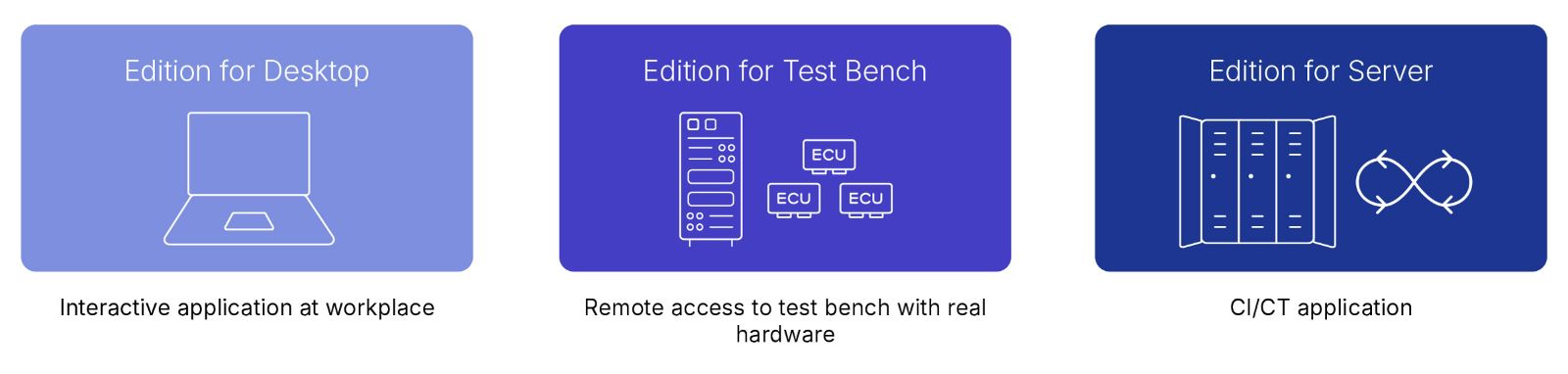
| Edition | Environment | Working Method | Real / Virtual Environment |
| The Desktop Edition is abbreviated as CANoe DE ... the classic CANoe |
|
| For work without a real hardware connection, you only need CANoe DE in the CANoe4SW Desktop Edition specification. |
| The Test Bench Edition is abbreviated as CANoe TBE |
|
| |
| The Server Editions are abbreviated as CANoe SE > More information |
|
| For work without a real hardware connection, you only need CANoe Server Editions in the CANoe4SW Server Editions specification. |
CANoe Variants: Tailored to Specific Feature Scopes
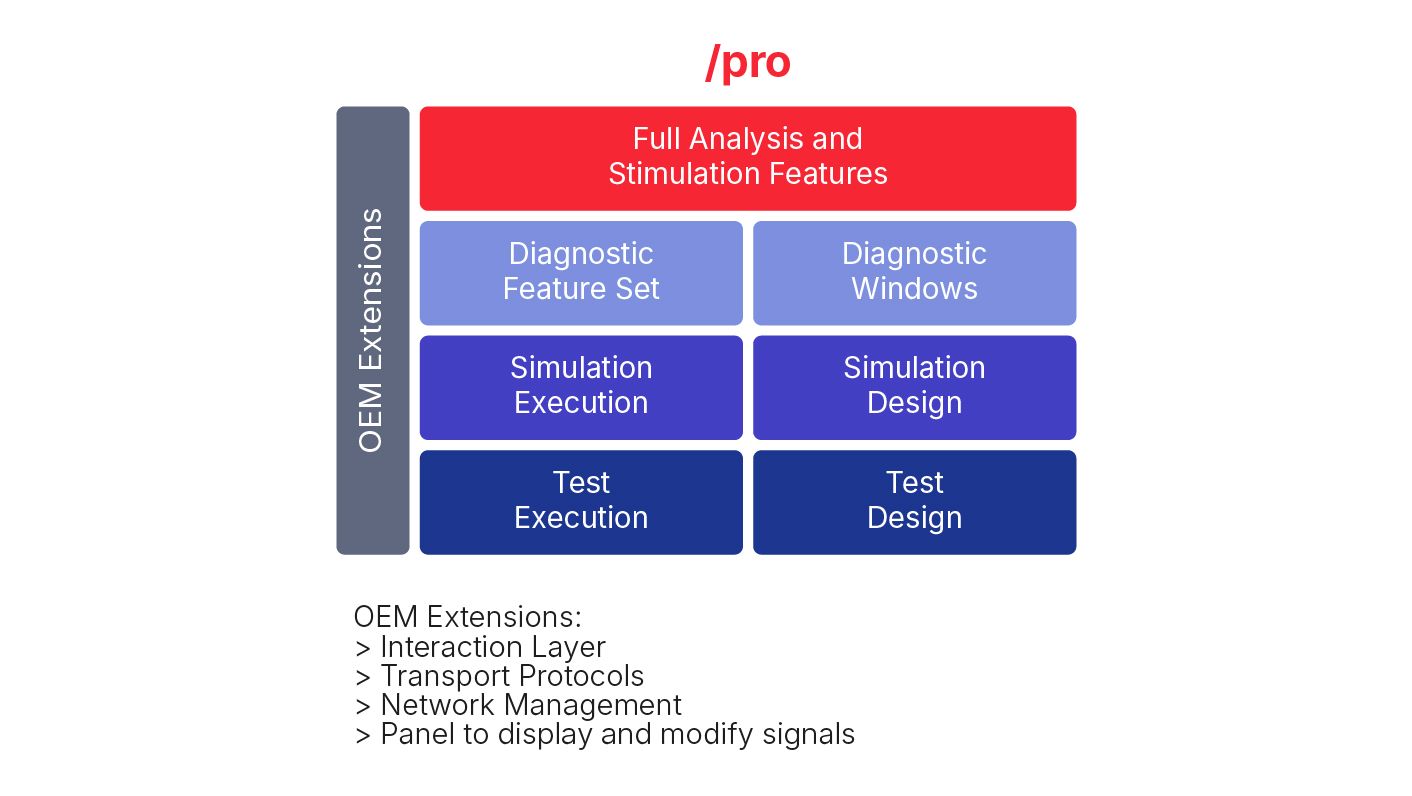
Variants represent staggered feature scopes of the Desktop and Test Bench editions. They are configured for the special applications as follows:
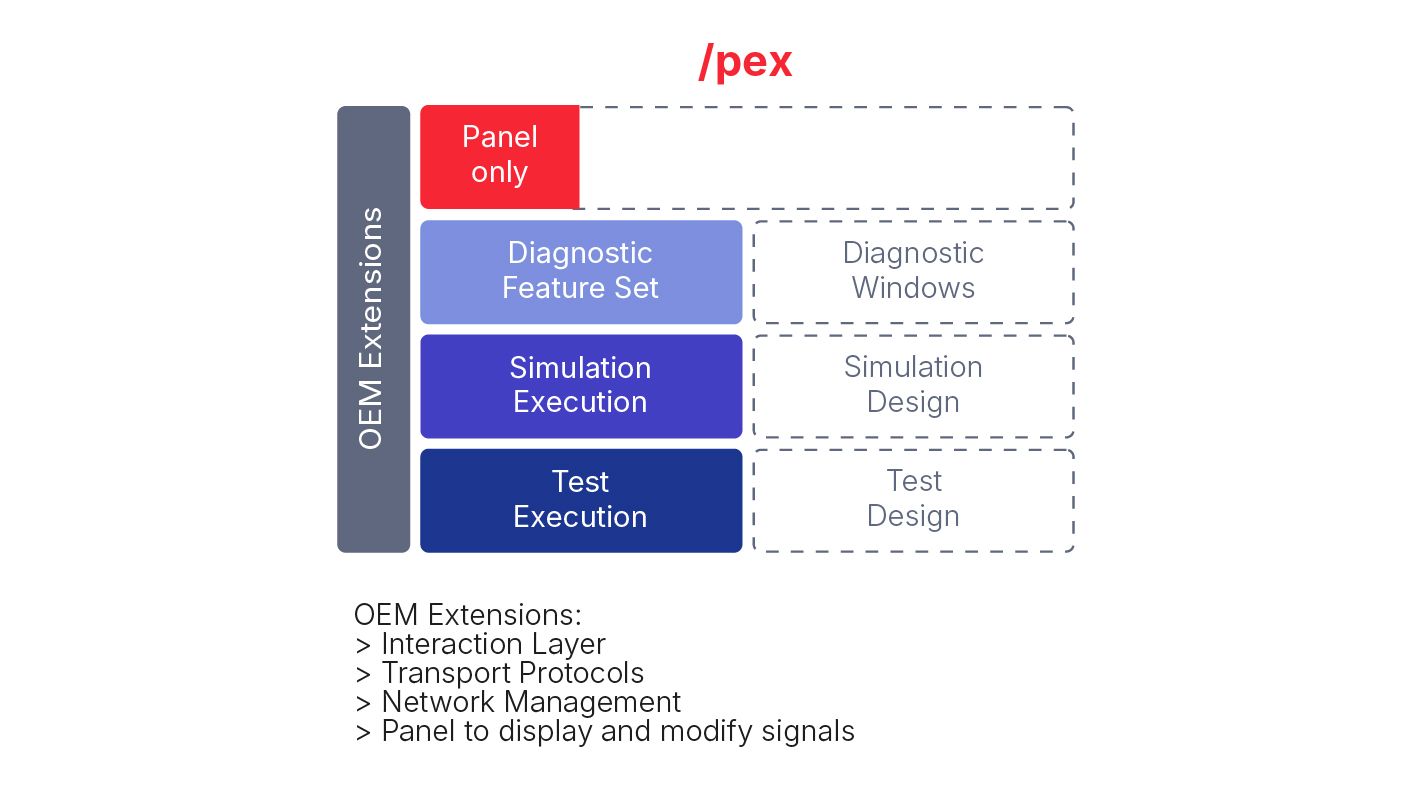
CANoe Project Execution Variant
... provides a graphical user interface exclusively. Simulation, test cases, and results are easily controlled without the need to specifically evaluate the underlying messages.
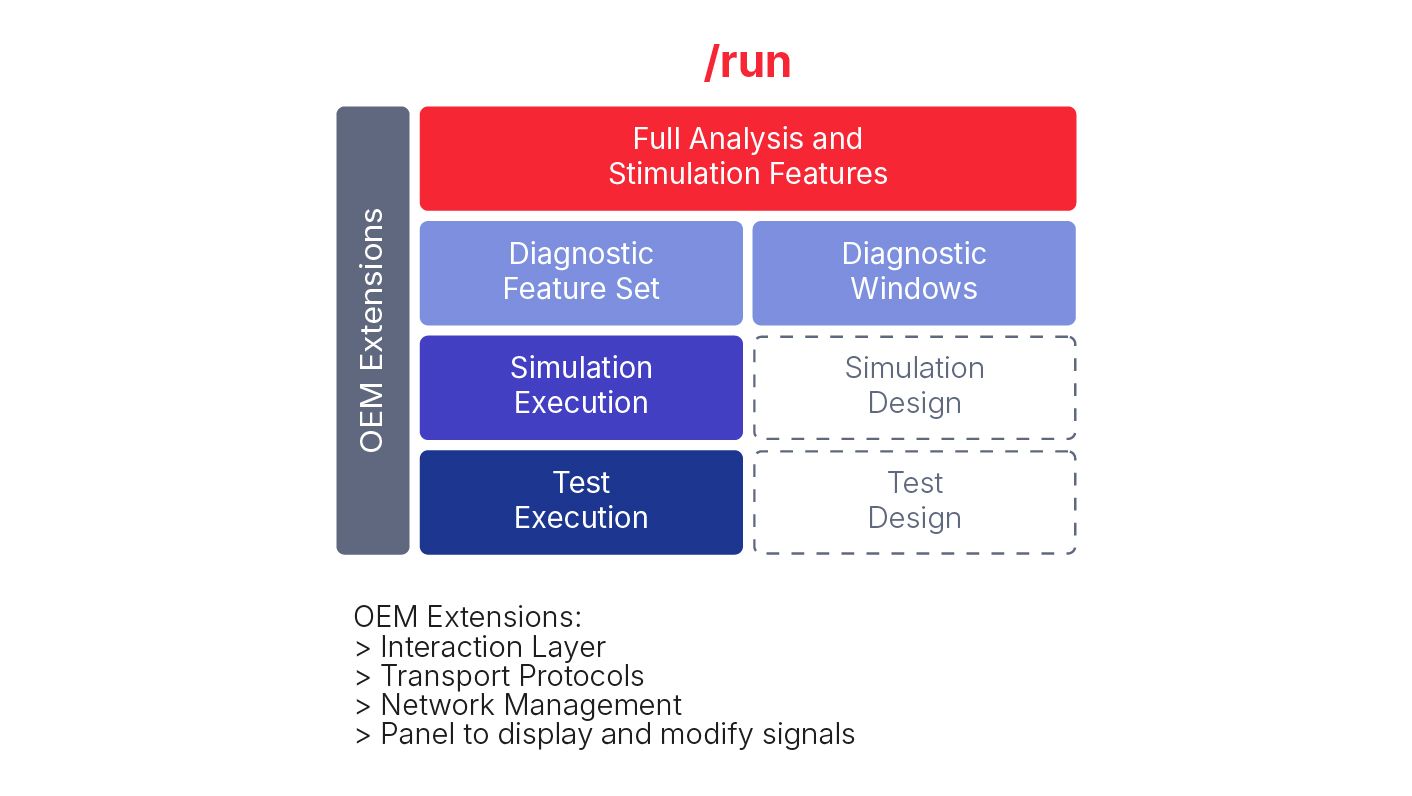
CANoe Options: Aligned to Standards, Bus Systems, and Protocols
Options flexibly extend CANoe with specific functional scopes for a wide range of bus systems, higher-layer protocols, measurement tasks, and diagnostics validation. The options are available individually and can be flexibly combined. Availability depends on the respective CANoe edition and variant.
The CAN option is already included in CANoe. It is also the basis for the other CAN-based protocols J1939, ISO 11783, and CANopen. However, CANoe is also available without CAN support, using only other bus systems.
A429Ideal for the test and analysis of ARINC 429 buses and of individual devices on up to 32 channels, regardless of whether raw data or physical quantities are required. | NEW: ADASThe ADAS option provides comprehensive support for analyzing, simulating, and testing your automotive ADAS functions, using either recorded or simulated data. | AFDXIdeal for testing and analysis of entire AFDX networks as well as individual devices, regardless of whether raw frames or payload contents are needed. |
AMD/XCPOffers access to the ECU memory. Reading/writing to ECU memory locations is performed via the ASAM standardized XCP protocol or CCP protocol. Configuration is done with A2L files. | CAN | A825Covers most use cases for ARINC 825. The multibus approach lets you simultaneously operate multiple channels and different bus systems, e.g., CAN (ARINC 825), A429 (ARINC 429), AFDX® (ARINC 664), and Automotive Ethernet. | CANopenA powerful tool that supports the entire development process for CANopen networked systems, from planning to development and testing and finally to start-up. |
Car2xFor application development and function testing of ECUs for vehicles or traffic infrastructure based on V2X application messages. | ConnectivityCANoe.Connectivity extends CANoe with functionality for testing applications based on HTTP/REST, MQTT, Modbus, and wireless protocols like BLE, NFC, and UWB. | DDSEnables convenient testing, simulating, and analysis of DDS systems. You create simulations of DDS participants in the shortest possible time and implement extensive tests during the entire development cycle. |
DiVaAutomated testing and validation of automotive diagnostic software implementation in ECUs. Reproducible test cases are generated in CANdela or ODX format. | Electric MotorPhysics-based simulation models of electric motors and components to perform closed-loop HIL tests of Motor Control Units (MCUs). | EthernetExtends CANoe with access to automotive Ethernet networks. The interfaces of the VN5600 family, for example, are used for this purpose. |
FlexRayExtends CANoe for analyzing distributed realtime systems. | For EtherCATAllows the integration of EtherCAT slaves via up to two integrated EtherCAT® masters. This includes a large number of devices for direct use in CANoe. | ISO 11783Suitable for the design, diagnostics, and testing of ISO 11783-based networks and components. |
J1939Well-suited to the development, design and verification of J1939 networks. | J1587The seamless integration of J1587 in CANoe lets you interact with these networks in a very simple, quick and reliable way. | LINProvides analysis, test and simulation capabilities to support development of LIN ECUs and networks. |
ScopeIntegrated oscilloscope solution based on USB oscilloscope hardware for detailed analysis of the physical and data link layer. | NEW: SDCSimulating and testing SDC (Service-oriented Device Connectivity) participants and distributed SDC use cases in modern medical environments. | SensorEasier analysis, simulation and test of the sensor-specific protocols PSI5 (Peripheral Sensor Interface) and SENT (Single Edge Nibble Transmission). |
SmartChargingAnalyze, simulate and test the communication behavior of an electric vehicle (EV) or a charging station (EVSE) during the charging process. | NEW: Vehicle and DriverReady-to-use models of vehicles, vehicle components, and a virtual driver, providing plausible and consistent input signals to your ECU. |
More About CANoe