Made-in-Thailand DC Fast Charger – A Success Story of EDS
Enabling Interoperability and Reliability with vSECC Controller
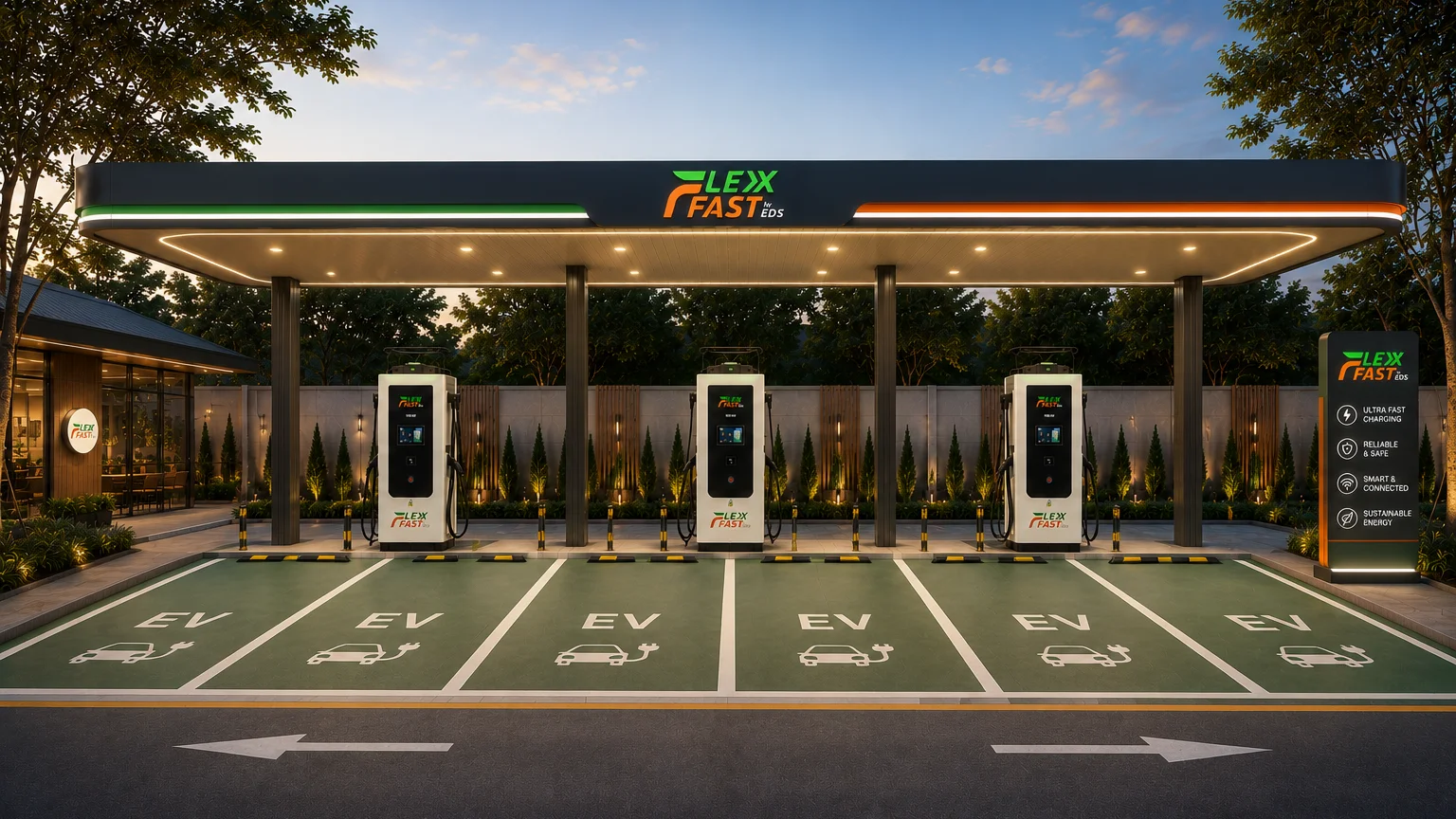
Thailand is leading EV adoption in Southeast Asia, raising the bar for scalable and reliable public charging infrastructure. DC charging stations of EDS, enabled by Vector’s vSECC Controller, demonstrate how fast deployment, standards compliance, and high operational uptime can be achieved simultaneously.
Success Story at a Glance
Made‑in‑Thailand DC Fast Charger – EDS and Vector
EGAT Diamond Service (EDS) successfully developed a locally engineered DC fast‑charging platform for Thailand, enabled by Vector’s vSECC Controller.
- Customer: EGAT Diamond Service (EDS)
- Project Context: Development of a “Made‑in‑Thailand” DC fast charger to support rapid EV adoption while ensuring interoperability and long‑term reliability
- Key Challenges Addressed: Limited local supply chain, high‑power DC technology complexity, multi‑standard compliance, high uptime requirements, and after‑sales service readiness
- Solution: Vector vSECC Controller
- Operational Benefits: Reduced system complexity, shorter development and integration cycles, simplified deployment and maintenance via a user‑friendly web interface
- Impact: Reliable operation and consistent charging performance across deployed sites, validating the platform for nationwide and regional rollout
KPIs:
High operational uptime under real‑world and demanding environmental conditions
Reduced time‑to‑market through a proven, standards‑compliant charging controller
Introduction
EGAT Diamond Service Co., Ltd. (EDS) is a Thailand based engineering and service provider with strong core competencies in electric mobility infrastructure. In the field of electric vehicles (EV) charging infrastructure, EDS is tasked by the authority with the deployment of future-proof and locally engineered high-power charging stations for Thailand and the region. With this mandate, EDS plays a key role in advancing cleaner and smarter mobility by delivering charging infrastructure that supports Thailand’s rapidly growing EV ecosystem.

The Challenges
EDS faces several challenges in developing a domestic DC fast‑charging solution. First, the local supply chain for critical components, such as power modules, PLC communication units, and connectors, is limited, increasing integration risk. Second, high‑power DC charging systems introduce a significant technology gap and learning curve for the development team. Third, compliance with multiple international standards (e.g. IEC 61851, OCPP) adds further complexity, requiring deep standards knowledge and rigorous implementation. Beyond development, EDS also needs to ensure high reliability and uptime under demanding weather and operational conditions. They also face another challenge of establishing a responsive after‑sales service model to support long‑term operation, maintenance, and software updates.
The Goals
Against this backdrop, EDS sets out to establish a truly “Made in Thailand” EV DC fast-charging product and platform that combines global technology with strong local engineering capabilities. The goal is to enable local assembly and sourcing wherever possible, without compromising on international standards, quality, or performance. Each charger is required to be designed not only for initial deployment, but for long term operation – delivering high reliability, consistent uptime, and serviceability throughout its lifecycle. In this way, EDS aims to build scalable, futureproof DC charging stations that support Thailand’s EV ambitions while strengthening own engineering competence.
The Solution
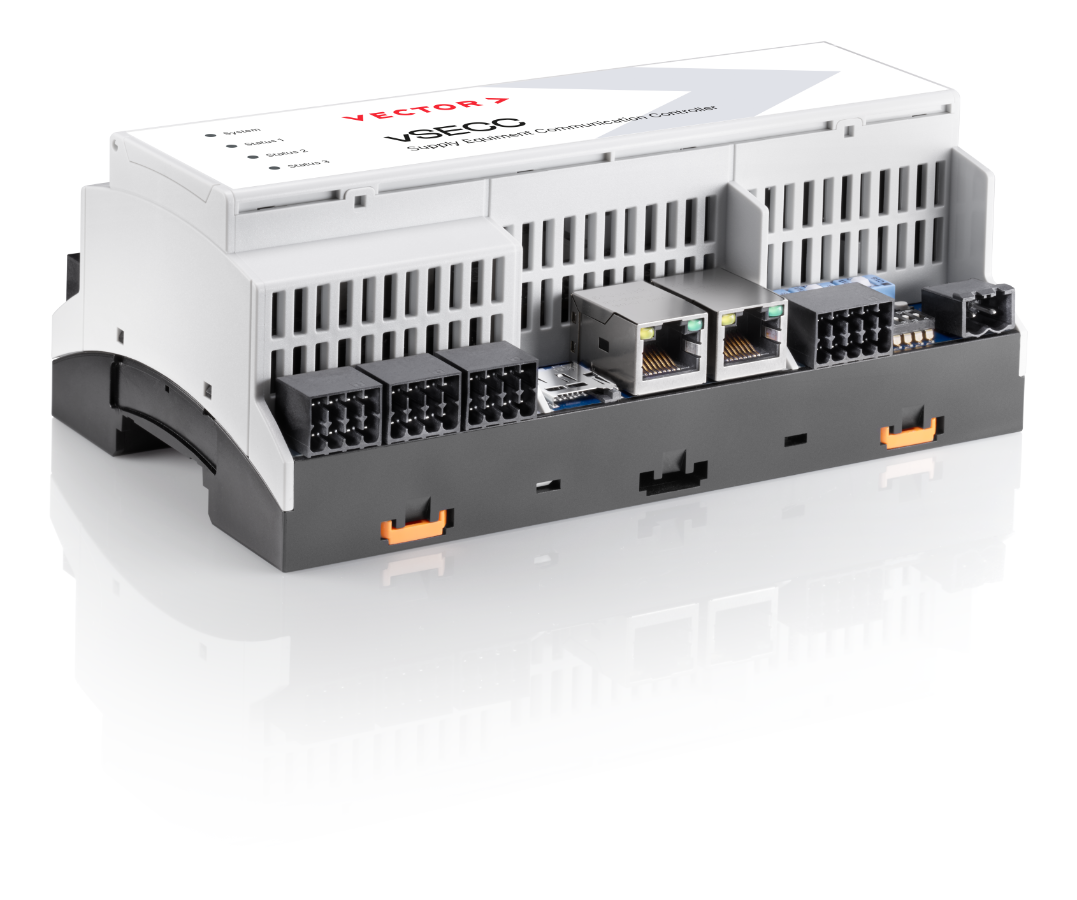
To overcome the supply chain challenge of developing a locally engineered DC fast charger, EDS adopts the vSECC Controller from Vector Informatik as the central charging intelligence. The limited local supply chain for critical components shapes the system architecture requirements. To mitigate dependency on any single vendor or technology, EDS requires an SECC solution that is open, modular, and compatible with components from different suppliers. This flexibility – supporting multiple communication interfaces of vSECC Controller – is essential to allow seamless integration of available power modules and other peripherals.
Technology complexity and a steep learning curve in high‑power DC charging are also key challenges for the project. The vSECC Controller helps tackle this by providing a ready‑to‑use, standard-compliant control platform that makes DC charging easier to understand, integrate, and operate. In addition, Vector supports EDS engineers with clear step‑by‑step documentation, practical E‑learning, and direct support from experienced Vector engineers, helping the team gain confidence quickly and accelerate development and deployment.
Compliance with multiple charging and backend standards was another main challenge, as DC chargers must communicate reliably with vehicles and backend systems across different markets and EV models. The vSECC Controller addresses this by supporting relevant charging communication protocols, including ISO 15118, DIN SPEC 70121, and IEC 61851, as well as DC Bidirectional Power Transfer (BPT) according to ISO 15118‑20. In addition, vSECC Controller supports OCPP 1.6 and OCPP 2.0.1 (IEC 63584), ensuring seamless backend integration.
For public DC fast chargers, reliable operation and high uptime over long periods are essential. EDS therefore needs a solution that not only performs daily operation, but is also easy to configure, operate, and maintain. vSECC Controller offers a user-friendly Web Configuration Interface with simplified configuration and built-in troubleshooting capabilities, supporting smooth deployment and efficient services. In addition, continuous software updates by Vector enable ongoing improvements, fast issue resolution, and system stability

The Outcome
As a result, EDS has successfully deployed DC fast charging stations at different locations in Thailand. All deployed chargers are operating reliably under demanding conditions, demonstrating stable performance, consistent charging behavior, and overall technical robustness. The positive operational results have validated the chosen solution with vSECC Controller. It provides a solid foundation for further rollout, with plans to expand deployment to additional sites across Thailand and into neighboring regional markets.
Related Products