From Theory to Industrial Systems Engineering Practice
How Model-Driven Concepts Work in Industrial Practice – Insights from Recent Guest Lectures
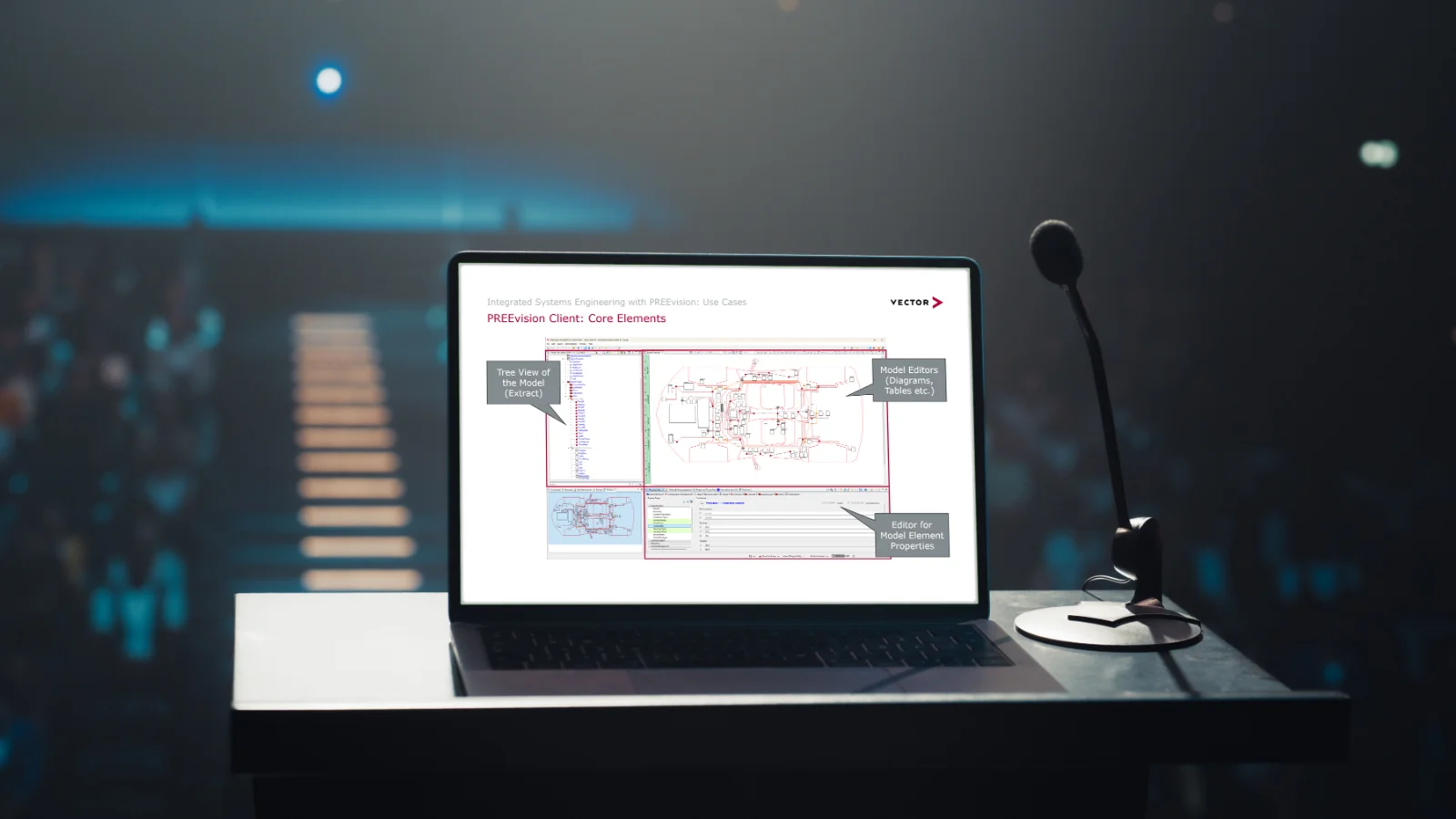
Model-driven development is much more than a theoretical concept taught in academic lecture halls; it is an essential methodology for mastering the complexity of modern cyber-physical systems. In three guest lectures at leading universities this year, experts from Vector demonstrated how core principles of Model-Driven Software Development (MDSD) are actively applied in demanding industrial practice. PREEvision served as a concrete example of the successful transfer of these methods into a comprehensive commercial tool.
What begins as a method in the lecture hall quickly becomes complex engineering practice in industrial projects. Under the title "PREEvision: Model-Driven Engineering in the Wild – A Success Story of MDSE Practice at Vector", our experts gave students at the Karlsruhe Institute of Technology, the University of Stuttgart, and Ulm University practical insights. The focus was on how models are built, visualized, and used efficiently for the development of complex systems.
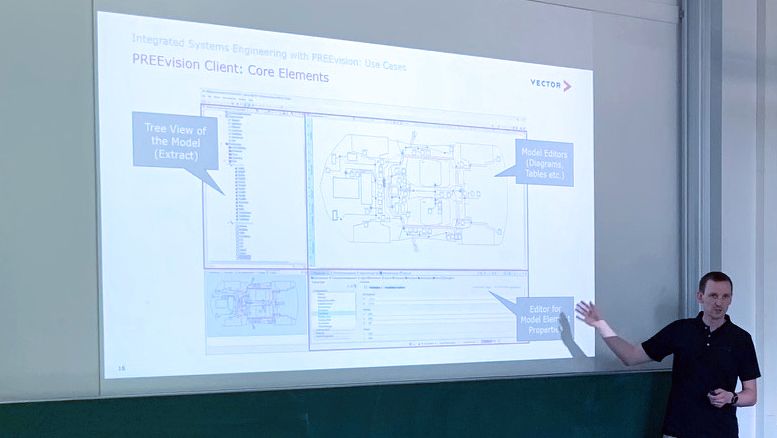
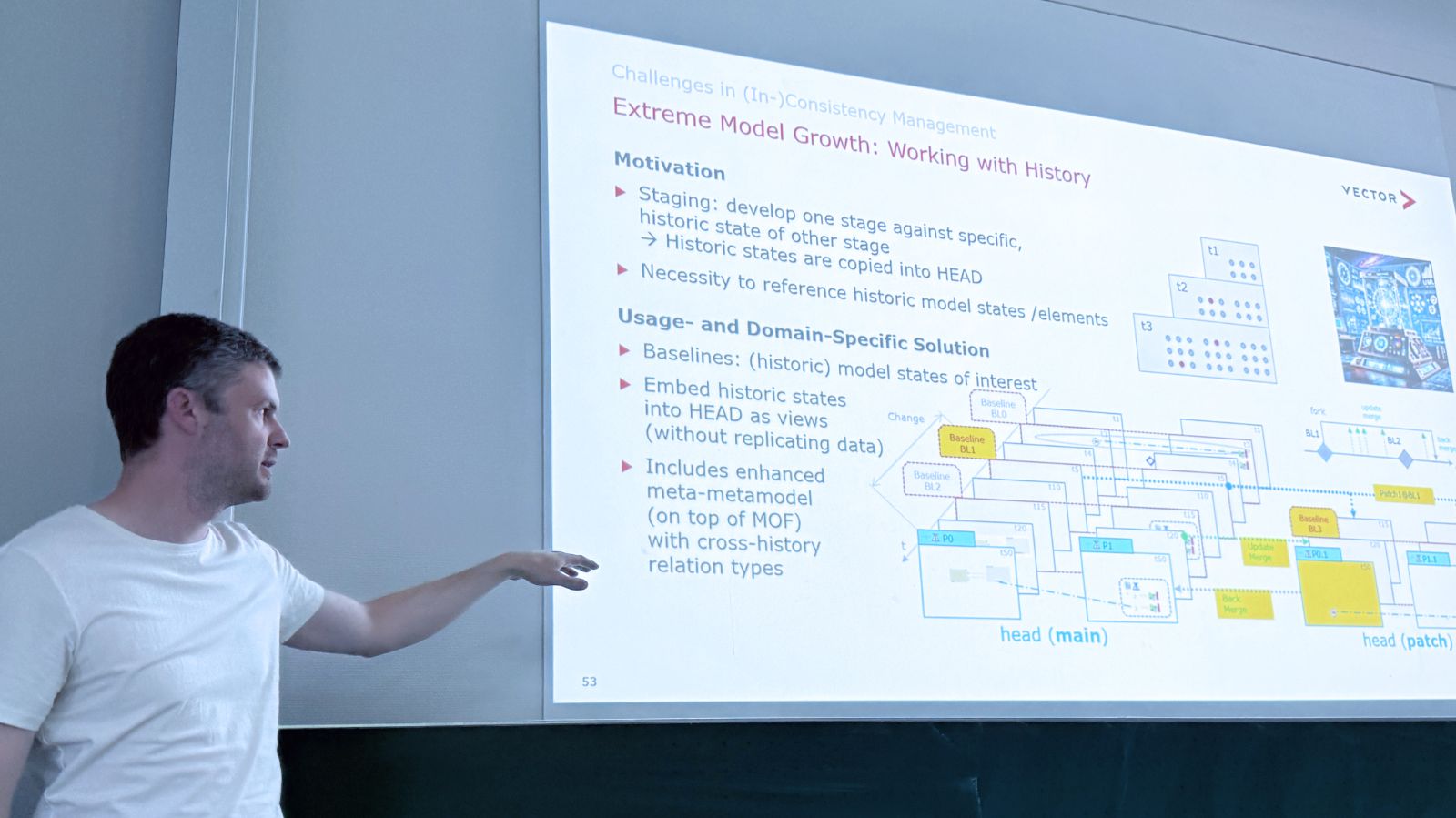
The lectures illustrated how users interact with the models via diagrams, structured model views, and supporting functions. At the same time, it became apparent how technical foundations such as data engineering, metamodeling, and model transformation shape the product functionality of PREEvision. Another focus was on the challenges of real-world engineering processes: growing model sizes, consistency management, baselines, and handling historical model states. This showed how closely methodological knowledge, software development, and practice-oriented systems engineering work together.
PREEvision stands for an integrated approach to Model-Based Systems Engineering (MBSE). The tool supports the development of complex cyber-physical systems and connects requirements, architecture, hardware, software, and tests via consistent traceability. This creates seamless information across all development levels – an essential foundation for robust and future-proof systems.
For Vector, this exchange with universities is a central component in making technological concepts understandable at an early stage, fostering innovation, and actively shaping the knowledge transfer between research and industrial application. Anyone who wants to not only describe systems engineering theoretically but also implement it practically needs integrated models, consistent data, and clear traceability. PREEvision brings exactly these levels together.