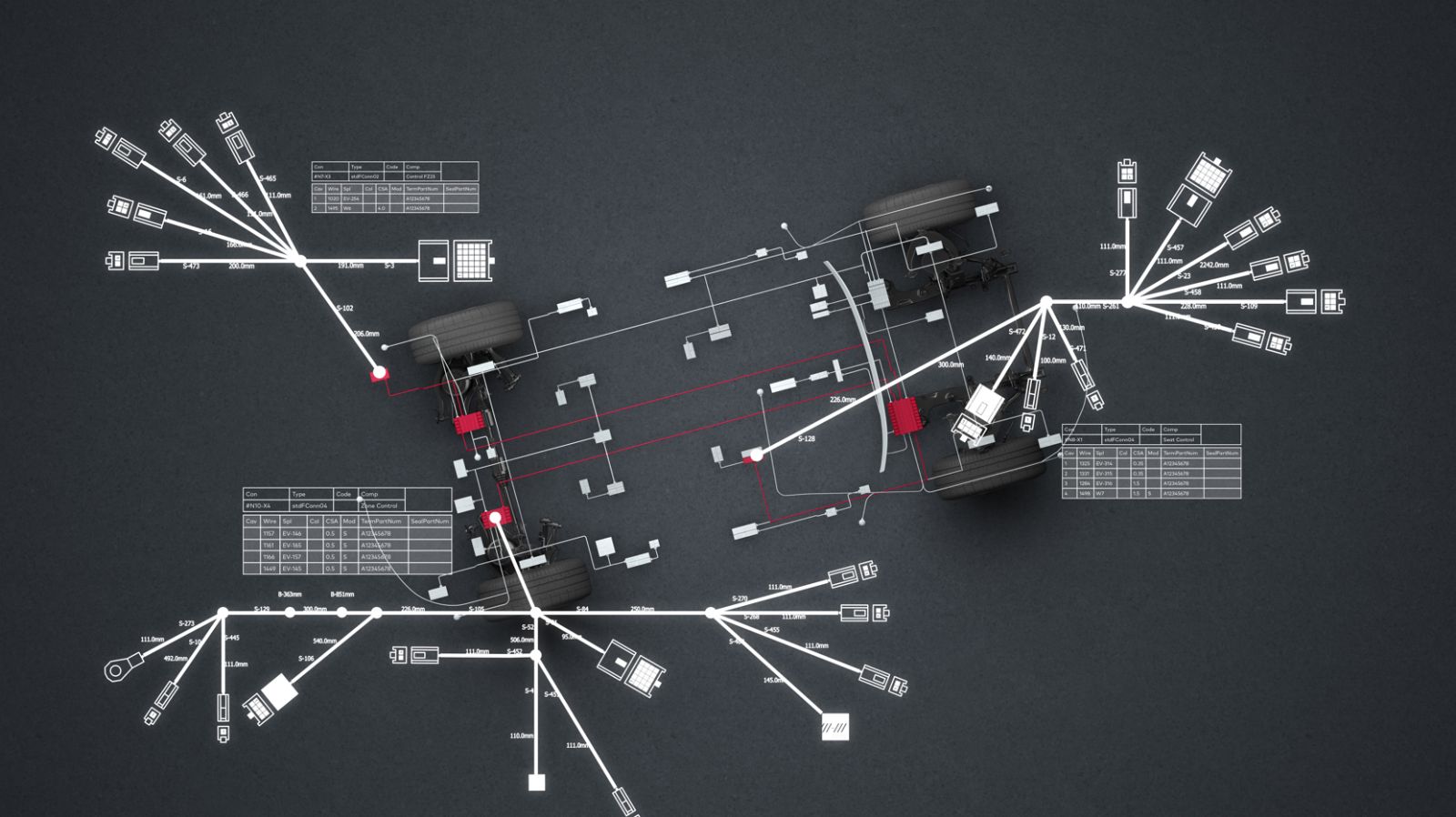
Continuous Data for Wiring Harness Development: Our Takeaways from Bordnetze Digital
How a Model-Based Approach Keeps Data Intact Across Disciplines, Tools and Company Boundaries
Wiring harness development fails at the handovers, not at the drawing board. At Bordnetze Digital in Stuttgart, Vector showed how a model-based approach keeps data intact from architecture to harness design.
Bordnetze Digital: Where Wiring Harness Data Takes Center Stage
On September 24, 2026, experts from OEMs, wiring harness manufacturers and software vendors met on the ARENA2036 campus at the University of Stuttgart. The congress, organized by ARENA2036 and prostep ivip, focuses on data workflows and data processing in wiring harness development and manufacturing. Many attendees came from IT, methods and tools departments.
Data exchange and interfaces shaped much of the program. The VEC interface (Vehicle Electric Container) drew particular attention. It keeps gaining adoption, at least in Europe.

Continuous Data from Architecture to Harness
Harald Bucher, Senior Product Management Engineer for PREEvision and wiring harness development at Vector, presented how PREEvision keeps wiring harness data continuous. Information gets lost wherever data crosses a boundary: between disciplines, between ECAD and MCAD, and at the interface between OEM and Tier 1. PREEvision consolidates distributed data in a single model-based approach. This delivers:
- Consistent, model-based engineering from architecture to wiring harness design
- Horizontal and vertical traceability
- Automated wiring harness synthesis
- Design variants that carry over from system architecture into wire and harness development
Variants: Where Manual Work Hurts Most
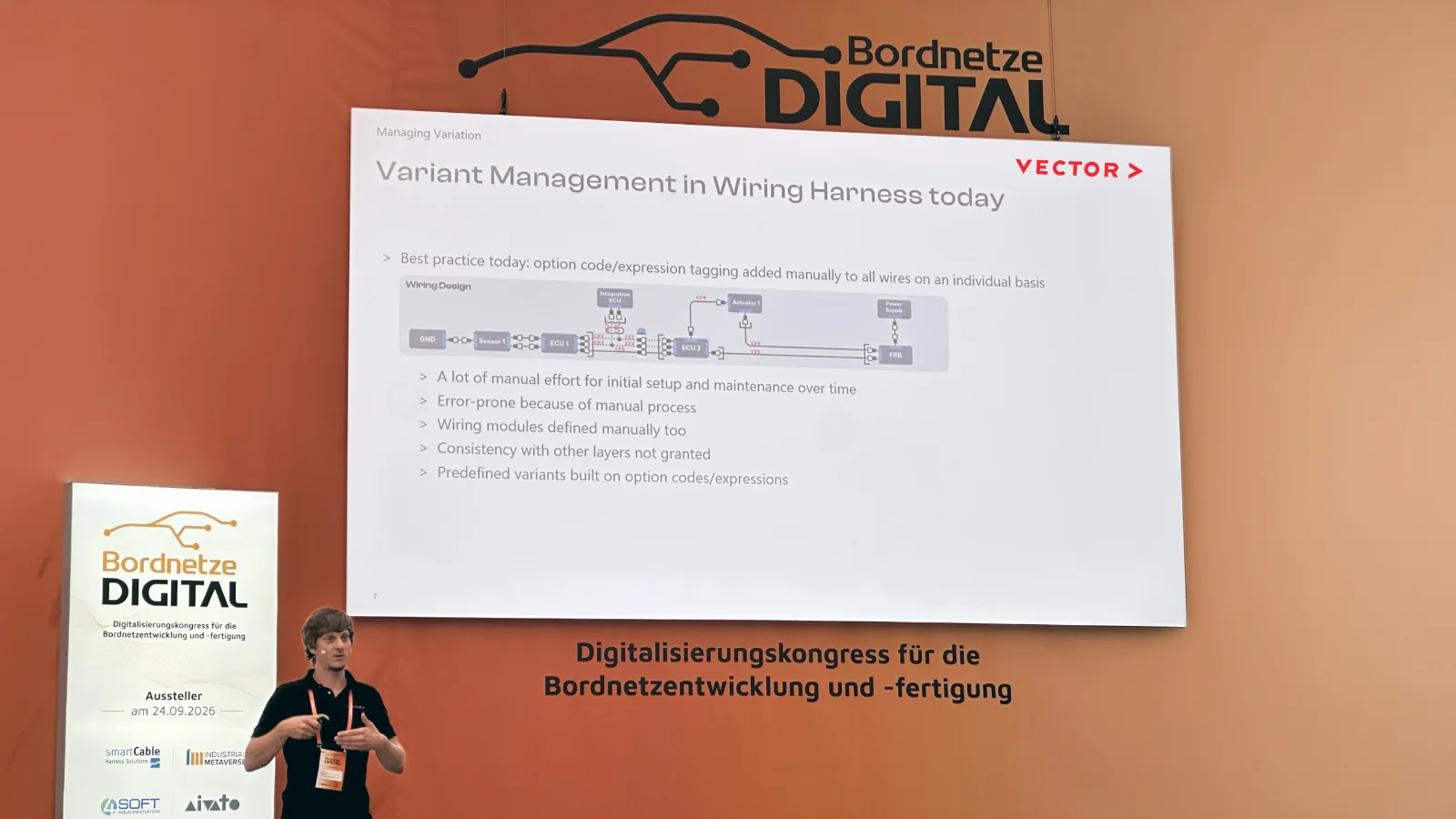
Variant management showed the problem clearly. Today's best practice still relies on option codes and expressions that engineers add to each wire by hand. That approach has clear limits:
- High manual effort for initial setup and ongoing maintenance
- Errors, because every tag depends on a manual step
- Wiring modules that engineers also define by hand
- No guarantee of consistency with other layers
A model-based approach derives variants from the system architecture instead of tagging them afterwards. The wiring harness then follows the architecture, and changes propagate without a manual sync step.
Why This Matters for MBSE
The wiring harness is where a system architecture becomes physical. If architecture model and harness design drift apart, errors surface late and cost more. MBSE closes that gap with one model, traceable decisions and variants defined once. Standardized interfaces such as VEC complete the picture across company boundaries.